Installing Rooftop Equipment & The Importance of Hiring Professionals
No matter what industrial roof type you have, it likely hosts a variety of equipment and systems necessary to meet the operational needs of your commercial facility or factory.
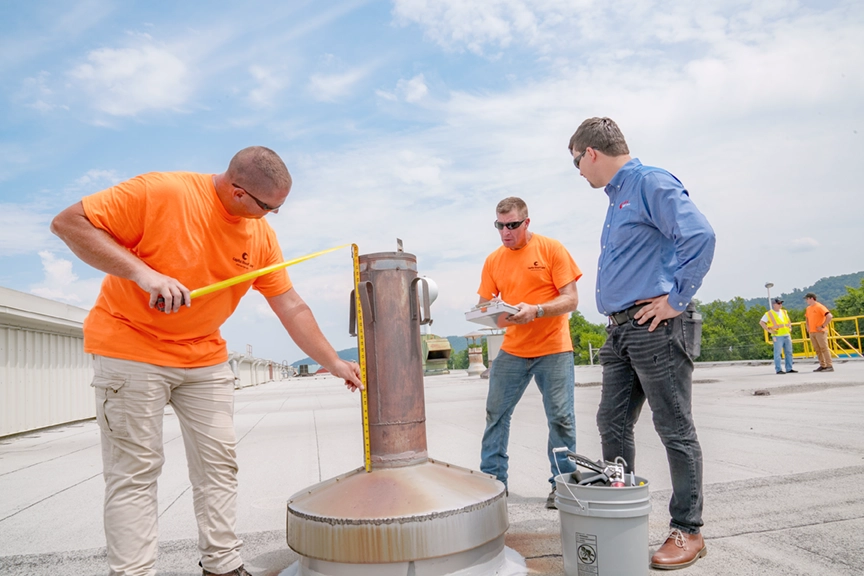
“The specific type of equipment installed on a roof deck can vary, based on the nature of your business, the building’s function, and its size,” said Steven Fisher, Brand Manager for Capital Roof Care. “The most common types of equipment installed on commercial roofs include HVAC units, rooftop solar panels, communications equipment, cooling towers, roof access hatches and ladders, skylights and roof windows, and lighting protection and fire suppression systems.”
With so much money invested in crucial rooftop equipment, it’s imperative to hire a roofing professional and subcontractors to install it. Not only will they ensure this equipment functions properly, but they can also guarantee the roof will not be damaged.
Roofing experts and qualified subcontractors have specialized knowledge and experience working with various commercial roof types, including TPO, metal, EPDM, single-ply, cool roof, foam, tar-and-gravel, flat, and shingle. They also know how to correctly install rooftop equipment while protecting the building, the roof warranty, and the people who work inside the facility.
There are six reasons why you should consider hiring roofing professionals and subcontractors when new equipment needs to be installed on your roof deck. There are also three categories of questions you should ask any contractor before they get up on your roof, in order to confirm they have the right experience, processes, and accountability to do the job correctly.
Benefits of Hiring Roofing Professionals & Subs
Prevent Roof Damage and Leaks
The first reason you should hire a roofing professional when new equipment needs to be installed on a roof is that they will have the right tools to do the job.
“Even if they aren’t doing the work, they can advise subcontractors on what tools to use,” said Merv Fisher, CEO of Capital Coating and Capital Roof Care. “If you don’t choose to work with a professional roofing company, your subcontractors may be forced to improvise, which could lead to mistakes that cause future roofing problems,” Fisher stated.
Commercial roofs are engineered systems. Improper penetrations, flashing, or load placement can shorten a roof’s lifespan, damage insulation and decking, or trigger leaks and water intrusion, which could require a commercial roof leak repair. Roofing professionals know how to seal penetrations and protect a roof’s membrane properly.
You might think that working with a professional roofing contractor is too expensive. Although you will spend some additional money on the front end, you will save money in the long run. Think of this fee as an investment, rather than a potential costly future roofing emergency.
Example:
Let’s use solar panels as an example of a new piece of equipment that needs to be installed on a commercial roof deck. Most solar panel systems are installed using mounting brackets that are bolted directly to the roof. While experienced installers take precautions to minimize risk, the simple fact is that whenever you penetrate a roofing system, you increase the chance of future water intrusion. If these mounting brackets are not installed by a professional who knows what they’re doing, the following issues can occur.
- Commercial roof leaks and water intrusion
- Mold and mildew growth
- Interior ceiling stains and destruction caused by water
- Roofing materials can get damaged.
To prevent these problems, you need to contract with a roofing professional.
Ensure Proper Load Distribution
The second reason you should hire a roofing professional when installing new roof equipment is that apparatuses, such as HVAC units, solar panels, or communications equipment, can be heavy, weighing thousands of pounds. If the load of the roof equipment is not distributed correctly, it can result in a disaster.
By hiring roofing professionals, you will ensure that all installed roofing equipment is verified for structural capacity and properly placed to distribute weight correctly, preventing long-term roof sagging or structural failure.
Preserve Manufacturer and Workmanship Warranties
Any good commercial roof will have a warranty. There are several distinct types of warranty coverage. The most common are:
- Material Warranty: Covers defects in roofing materials but not labor.
- Workmanship Warranty: Covers installation errors but not material defects.
- Full System Warranty: Covers both material and workmanship issues.
- No-Dollar-Limit (NDL) Warranty: Covers repairs regardless of cost if conditions are met.
- Limited Liability Warranty: Caps repair costs at a fixed amount.
To keep these warranties valid, facility managers must ensure that an approved, certified roofing contractor performs all roof work.
“Warranties can be voided if unqualified trades alter the roof,” said Bill Morgan, Capital Roof Care’s president. “More specifically, any unauthorized alterations, such as adding new equipment or structures without prior approval from the warranty provider, can void coverage. Using a roofing professional will help ensure your warranties remain intact and enforceable,” Morgan said.
Maintain Code Compliance and Safety Standards
Roofing equipment installations must also comply with local building codes and regulations.
“Roofing professionals are familiar with these codes and can verify if any new roof equipment installation meets all the requirements,” said Steven Fisher. “Failure to comply with codes can lead to legal issues and may result in costly corrections in the future.”
Roofing professionals are also trained to work safely on roofs. The four specific areas roofers should be sufficiently trained in include:
- Understanding the requirements of OSHA’s Fall Protection standards at 29 CFR 1926, Subpart M, to protect workers exposed to falls six feet or more above a lower level
- Implementing safe work practices to reduce the possibility of falls
- Supervising workers to ensure fall protection equipment is used and maintained correctly
- Leading by example—all employees must follow the rules they are responsible for enforcing.
In addition to training, roofing professionals also invest in equipment and safety gear to ensure they can perform their work without harming themselves and avoid costly injuries.
Protect Liability and Insurance Coverage
The fifth reason you should hire roofing professionals when new equipment is installed on your roof deck is to protect your business’s liability and insurance coverage. Any reputable roofing professional will carry proper insurance, including workers’ compensation. Having trained crews also shields facility managers and building owners from liability in the event of accidents or roof failures.
Professional roofers and subcontractors understand fire ratings, wind-uplift requirements, and OSHA safety regulations. Possessing this level of understanding will reduce a facility manager’s liability and ensure inspections are passed.
Reduce Long-Term Costs
The final reason you should hire a roofing professional when new equipment needs to be installed on a roof is that collaboration between roofing professionals and subcontractors will streamline project management, resulting in cost savings. Effective communication and coordination between these parties will result in a more efficient installation, reduce the likelihood of delays, and ensure the project stays on schedule.
Moreover, roofing professionals don’t cut corners, which can lead to costly emergency roof repair costs, premature roof replacement, or insurance claim disputes. By hiring roofing professionals and subcontractors from the start, you will protect your roof and lower the total cost of ownership.
What Questions Should You Ask?
To guarantee the roofing professionals and subcontractors you hire truly understand how to properly install and/or coordinate equipment installations on a commercial roof, there are three categories of questions you should focus on in order to confirm their experience, process, and accountability. Getting these questions answered is just as important as the price you will pay to have new equipment installed on your roof deck. The three categories and subsequent questions you should ask are as follows.
Experience & Credentials
- What types of commercial building roof types have they worked with (TPO, EPDM, PVC, modified bitumen, metal)?
- How often do they coordinate rooftop equipment installations (HVAC, solar, exhaust fans, antennas)?
- Are they certified by the roof manufacturer of the roof that requires work?
Trade Coordination
- How do they coordinate with HVAC, electrical, or mechanical contractors?
- Who is responsible if another trade damages the roof?
- Will a roofing professional be on-site during the equipment installation?
Inspection, Documentation & Follow-up
- Will they perform a final roof inspection after the equipment is installed?
- Do they provide photos, drawings, or as-built documentation?
- Is there a warranty or service agreement covering their work?
Conclusion
The bottom line is that any commercial roof is not the place for shortcuts. If you need equipment to be installed on it, you should hire qualified roofing professionals and subcontractors. Doing so will prevent damage and future problems, preserve your roof’s warranty, ensure code compliance and safety standards are maintained, protect your building’s liability, and reduce long-term costs.
Thankfully, Capital Roof Care is here to help! Capital Roof Care specializes in all types of industrial roofs and helps commercial property owners and facilities managers get the most long-term value from their buildings’ roofs. As a trusted brand under its parent company, Capital Coating, Capital Roof Care brings unparalleled industry expertise and experience in rooftop equipment installation, maintenance, repair, and restoration.
“You’ll discover we are NOT just another commercial and industrial roofing company,” said Merv Fisher. “Our highly trained technicians thoroughly understand the construction and functional aspects of many different roof systems.” Contact Capital Roof Care to schedule an appointment to discuss the best way to install new roof equipment on your commercial roof.
Sources: