How the Freeze-Thaw Cycle Can Damage Commercial Roofs
If you have an industrial facility in the northeast, your facility experiences all four seasons – spring, summer, fall, and winter. No matter what commercial roof type you have—single-ply, spray foam, metal, or shingle—all components on your roof will move due to thermal expansion and contraction. During hot weather, roofing materials expand as they absorb heat, and when temperatures drop, they contract as they cool. This continuous cycle of expansion and contraction puts stress on the roofing system, particularly the seams, joints, and fastenings.
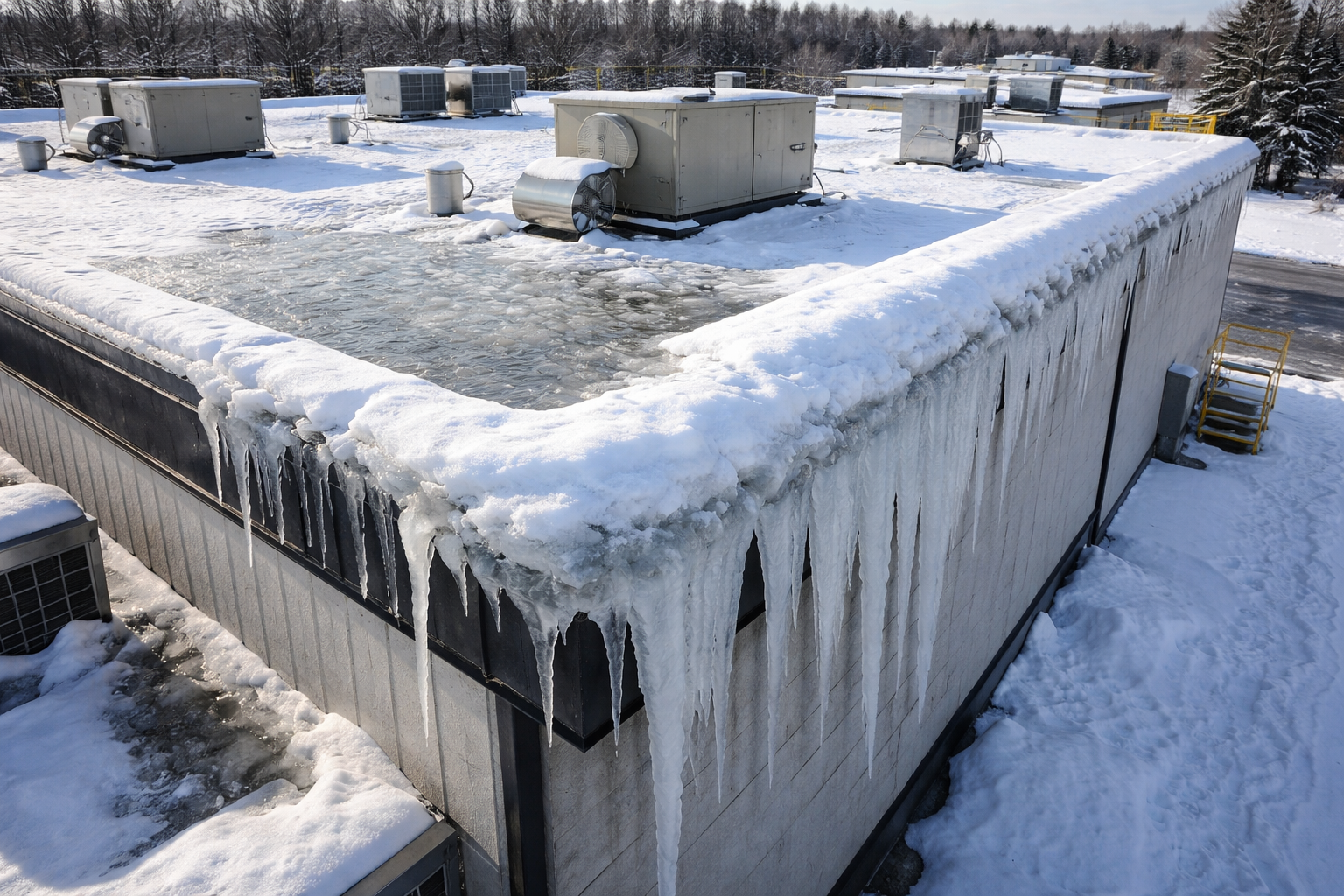
The winter months can be particularly problematic because of freezing temperatures, snow, and ice. On a cold day with the wind chill factor, the temperature can dip below zero; but, if the sun comes out and the wind dies down, you could experience a thirty-degree or more temperature swing.
“This freeze-thaw cycle has a negative impact that causes damage to your commercial roof,” said Merv Fisher, CEO of Capital 360. “That’s because this cycle allows moisture to get into small cracks or seams where it freezes, expands, thaws, and contracts over and over again. The result of this constant movement wreaks havoc on commercial roofs, causing significant damage and high repair bills if not addressed properly.”
To prevent your commercial roof from damage from the freeze-thaw cycle, facility managers should monitor the roofing membrane and be on the lookout for ice dams forming on the roof deck. That’s because both issues can cause catastrophic damage to your industrial roof. To prevent these problems, we will address both issues and how they can be prevented.
Roof Membrane Monitoring
The first step to prevent your industrial roof from being damaged by the freeze-thaw cycle is to monitor your roofing membrane for damage regularly.
“This thin, flexible, and durable material, which can be comprised of TPO, EPDM, PVC, or modified bitumen, is designed to create a continuous, watertight, and weatherproof seal on flat or low-slope roofs,” said Bill Morgan, President of Capital 360.
“However, when a roofing membrane is repeatedly subjected to expansion and contraction from the freeze-thaw cycle, it can crack, and seams can widen. When water seeps into membrane seams and lap joints and then freezes, it expands, forcing the seams apart. Over time, this phenomenon leads to open seams, failed adhesives, and fasteners that can no longer hold tightly,” Morgan stated.
Another negative roofing membrane issue that can occur due to the freeze-thaw cycle is a loss of membrane flexibility. When this happens, the membrane material can split, craze, or crack, especially in high-stress areas like corners, roof edges, and around penetrations.
A third common byproduct of the freeze-thaw cycle on the roofing membrane is the formation of blisters and delamination. If moisture becomes trapped beneath the membrane and then freezes and expands, it can create blisters. Once the temperature rises again and the water under the membrane thaws, these areas often delaminate, meaning the membrane separates from the insulation or substrate, weakening the entire roofing system.
Ice Dam Formation Monitoring
The second action you can take to prevent your industrial roof from being damaged by the freeze-thaw cycle is to monitor the roof deck for the formation of ice dams. After snow accumulates on a roof, it stays there until it melts, is removed, or blows away. If snow remains on the roof, the outside temperature dips below freezing, and the roof has uneven surface temperatures, ice dams form. Snowmelt refreezes at drains, scuppers, and low spots.
“Ice dams trap water on a roof’s surface, increasing hydrostatic pressure and forcing water into seams and tiny defects that wouldn’t normally leak,” said Fisher. Melted, pooling water can then infiltrate through your commercial structure, resulting in a commercial roof leak that harms the roofing material, insulation, and structural components inside your operation.
Here are the most common commercial roofing problems that can occur because of the formation of ice dams:
Flashing Separation and Fastener Back-Out
The freeze-thaw movement causes metal flashing to pull away from walls, curbs, and penetrations. Screws and anchors can slowly back out, leaving visible gaps and direct water entry points. Flashing is especially vulnerable to movement since it’s used to waterproof joints where the roof meets other structures, such as walls or vents.
Dried-Out Sealants
Sealants can also be added to the casualty list of wear-and-tear items. Many roofing systems rely on sealants for waterproofing. However, thermal cycling can cause sealants to crack or become ineffective, necessitating a commercial roof leak repair.
Ponding Water Damage
Standing water from poor drainage repeatedly freezes and thaws. This situation accelerates membrane breakdown, increases surface cracking, and adds excess weight that stresses the roof structure.
Saturated Insulation and Reduced R-Value
Once water penetrates the membrane, the insulation absorbs moisture, reducing its R-value. The freeze-thaw action further breaks it down, reducing thermal performance and increasing heating costs, while hiding damage below the surface.
Interior Leaks
Once water enters your commercial facility, you are also dealing with interior damage. In addition to being faced with emergency roofing repair, you’ll also be dealing with potential water damage to ceilings, walls, insulation, and equipment.
To learn more, read our blog, “Prevent Ice Dams & Preserve Your Commercial Roof”.
How to Prevent Freeze-Thaw Issues
To prevent membrane damage and ice dam formation from the freeze-thaw cycle, facility managers should implement preventive and mitigative measures to address problems before they occur. The first thing a facility manager can do is implement best practices for the freeze-thaw cycle. This includes:
Proper Material Selection
Choose roofing materials with higher flexibility or elasticity, such as certain types of thermoplastic membranes that can help your roofing system better withstand thermal cycling.
Adequate Expansion Joints
Install expansion joints in large roof areas to allow controlled movement, reducing stress on other parts of your roof.
Reflective Roof Coatings
Apply reflective coatings that can reduce heat absorption, thus minimizing the amount of expansion caused by temperature increases.
The second thing facility managers can do to prevent roof membrane damage and ice dam formation from the freeze-thaw cycle is conduct industrial roof inspections.
“If you have a flat roof or one that is prone to snow collection, the facility manager should also have a roof snow removal plan in place to clear snow and reduce buildup, so the potential for melting and refreezing is eliminated,” said Morgan. Facility managers should also have a qualified professional, such as Capital 360, conduct regular commercial roof inspections. A comprehensive industrial roof inspection from Capital 360 includes:
- Checking for loose rivets, bolts, and other components
- Examining seams and cracks for leaks
- Looking at the low points where water could pool
- Surveying the entire roofing system to detect signs of movement
- Checking other components, such as rooftop units and drainage systems, for signs of issues
- Removing potentially damaging debris from the roof while performing the inspection.
Preventive maintenance and prompt repairs will help ensure you get optimal longevity and value from your roofing system. A commercial facility might also want to consider a commercial roof maintenance plan. As part of their roof maintenance plan, Capital 360’s experienced roof technicians conduct 54-point visual inspections, assess and document roof condition, and provide recommendations on immediate and upcoming repair needs. The Capital 360 Freedom Plan also includes superior diagnostics via infrared imaging assessments, repair forecasting, and budget planning.
If your facility is consistently struggling with ice dams, a trusted CRC roofing professional can also suggest alternatives, such as heating cables that can be installed to de-ice and/or prevent ice formation, and materials or structures that can enhance drainage, particularly on flat roofs.
Conclusion
Every freeze–thaw cycle compounds existing roof issues. In addition to damaging the roofing membrane and causing other problems due to ice dams, commercial roofs in cold climates often experience premature aging, frequent leaks, and higher maintenance costs if winter-specific risks aren’t addressed.
The bottom line is that freeze–thaw cycles don’t usually cause one big failure; this phenomenon causes lots of small failures that add up fast. By implementing regular commercial roof inspections, implementing preventive and mitigative measures, and monitoring membrane issues and ice dam formation, facility managers can make prompt repairs. This includes plugging small cracks, implementing proper drainage, and performing proactive maintenance to significantly reduce freeze–thaw damage and extend the life of a roof, no matter what commercial building roof type you have.
Sources: